Media Training for Lawyers Handling High-Profile Cases
Legal professionals are trained to argue, question and reason with precision. What they are rarely trained to do is communicate under the conditions that a television camera, a live radio interview or a press conference creates. These are different environments from the courtroom or the conference room, and they operate according to different rules.
In routine matters, the gap between legal expertise and media fluency rarely matters. When a case attracts national coverage, that gap becomes consequential. A single unguarded comment, an answer that strays beyond confirmed facts, a tone that reads as defensive or dismissive — any of these can affect how the case and the firm are perceived by audiences who will form lasting judgements from a brief media exchange.
Media training for lawyers addresses this gap directly.
It prepares legal professionals to engage with journalists confidently, accurately and within the regulatory and ethical constraints that govern what can be said during active proceedings. For firms handling high-profile litigation, structured media preparation is not a supplementary communications service. It is a component of professional risk management.
Speak to InkedPR about media training for your legal team →
What Media Training for Lawyers Essentially Involves
Media training for lawyers is distinct from general public speaking coaching or corporate communications preparation. The legal context creates specific demands that generic training does not address: the constraints of sub judice, the requirements of SRA compliance, the risk of inadvertently disclosing privileged information, and the particular dynamics of media coverage that runs alongside active legal proceedings.
A structured media training programme for lawyers typically covers the following areas:
| Training component | What it develops |
| Interview technique | Composure, clarity and concision under questioning |
| Key message development | Identifying what can ethically and accurately be said, and saying it clearly |
| Difficult question handling | Responding to hostile or misleading questions without appearing evasive or defensive |
| Bridging techniques | Redirecting questioning toward agreed messages without antagonising the interviewer |
| Broadcast preparation | Specific preparation for television and radio environments, including on-camera practice |
| Confidentiality protection | Recognising questions designed to elicit privileged or sensitive information |
| Regulatory compliance | Understanding what cannot be said during active proceedings and why |
| Mock interview sessions | Realistic simulations under broadcast conditions with structured feedback |
The value of the training lies not primarily in technique but in preparation. A lawyer who has rehearsed difficult questioning, identified their key messages in advance, and understood the specific risks of the media context they are entering will perform considerably better than an equally experienced lawyer who has not prepared. The courtroom skills that make a barrister or solicitor effective in their professional context do not automatically transfer to a media environment, and assuming they do is a common and costly mistake.
Why Lawyers Struggle with Media Environments
Understanding why legal professionals find media engagement challenging is useful context for appreciating what training addresses. The difficulties are not a reflection of ability. They are a product of the specific differences between legal and media communication cultures.
Legal argument rewards precision, qualification and completeness.
A well-constructed legal submission is thorough, nuanced and carefully hedged. These are virtues in court. In a broadcast interview, these responses came across as evasive, complex, and lacking direct communication. The journalist or presenter asking a straightforward question is not interested in the qualifications that make a legal answer accurate. They want a clear, quotable response in plain language.
The problem compounds when the subject matter is sensitive or legally constrained. A lawyer who fails to credibly explain why they cannot answer a question creates a more damaging impression than almost any substantive statement. Handling the constraints of litigation communications, moments when the truthful answer is “I cannot comment on that” requires specific preparation to preserve credibility.
There is also the physical dimension of broadcast media. Camera presence, body language, pause management, and voice modulation all affect how a speaker is perceived. Legal professionals accustomed to formal courtroom or boardroom environments often find broadcast settings unexpectedly disorienting without preparation. On-camera practice sessions address this not by changing how a person presents but by familiarising them sufficiently with the environment that discomfort does not affect their performance.
When Media Training for Lawyers Is Necessary
Not every case requires formal media preparation for the legal team. Routine commercial litigation, private disputes and matters without public interest dimensions rarely generate media attention that warrants structured training investment.
The situations where media training for lawyers becomes a professional necessity include the following:
| Situation | Why media preparation is warranted |
| High-profile litigation against prominent defendants | Significant media interest is predictable; multiple journalists will seek comment |
| Group actions and class claims | Volume of claimants generates public interest; claimant stories attract broadcast coverage |
| Regulatory investigations alongside civil proceedings | Regulatory angle increases press interest and political commentary |
| Criminal proceedings involving corporate clients | Intersection of legal exposure and reputational risk requires careful communication |
| Defamation and reputation cases | The case is inherently about public narrative; media handling is central to the matter |
| Cases involving public figures or institutions | Public interest is high regardless of legal complexity |
In each of these situations, the risk of inadequate preparation is not hypothetical. Media coverage in high-profile litigation can affect claimant confidence, influence how potential additional class members learn about proceedings, affect the firm’s standing with funders and institutional stakeholders, and shape the public narrative in ways that persist long after the case resolves.
Preparing for a Television Interview During Active Litigation
Television interviews during live proceedings present a specific set of challenges that require particular preparation. The broadcast environment is unforgiving: statements are recorded, edited and broadcast to large audiences, and a single poorly judged answer can generate coverage that is difficult to correct.
In a litigation context, prepare for a television interview by going through the following stages:
- The first is message development. Before any broadcast engagement, the lawyer and their communications adviser should identify the specific points that can be made accurately and ethically, given the current stage of proceedings. These key messages form the foundation of all interview responses, and the preparation involves practising how to return to them regardless of how the questioning develops.
- The second is question anticipation. Broadcast journalists covering legal matters will have researched the case, spoken to opposing parties and identified the points of controversy or criticism. Preparing responses to foreseeable hostile questions is essential. The goal is not to have a rehearsed script but to have thought carefully enough about difficult questions that the answers are considered rather than improvised.
- The third is boundary management. Every lawyer preparing for a broadcast interview during active proceedings needs to be clear about the categories of question they cannot answer, and practised in how to decline those questions in a way that does not suggest evasion or raise additional concerns. “I’m not able to comment on the specifics of the evidence” is an acceptable answer. Appearing flustered or refusing to engage is not.
- The fourth is on-camera practice. Reading about how to handle a television interview is not equivalent to practising one. Mock broadcast sessions conducted under realistic conditions, with feedback on presence, clarity and message delivery, are the most effective component of television preparation.
Protecting Client Confidentiality Under Media Questioning
Client confidentiality is a non-negotiable professional obligation that does not change because a journalist is asking the question. Media training for lawyers places significant emphasis on how to protect confidential information under conditions that are specifically designed to elicit it.
Journalists covering high-profile litigation are skilled at framing questions in ways that make it easy to disclose more than intended. “Can you confirm that your client is seeking X amount in damages?” “Is it true that the defendant has offered to settle?” “What does your client make of the defendant’s response?” Each of these questions is designed to extract information that the lawyer has a professional obligation to protect.
Litigation communications training prepares lawyers to recognise these approaches and to respond in ways that are both honest and protective. The response to a question that cannot be answered is not silence or deflection. It is a clear, professional statement that this is not something the lawyer is able to discuss, delivered without the anxiety or hesitation that suggests there is something being concealed.
Protecting confidentiality in media engagement also involves understanding what has already entered the public domain through court filings, public statements or published reporting, and what remains genuinely confidential. The distinction between these categories is not always obvious, and preparation should include a specific review of what can and cannot be discussed given the current state of public information about the matter.
Contact InkedPR to discuss media coaching for lawyers handling sensitive litigation →
Common Mistakes Lawyers Make with Journalists
Understanding the most common errors in legal media engagement provides a useful framework for what training is designed to prevent. These mistakes are not unique to inexperienced lawyers. They arise from the specific mismatch between legal and media communication cultures, and they occur across seniority levels.
| Mistake | Why it creates risk |
| Overtechnical language | Journalists and their audiences do not have legal training; complexity reads as evasion or arrogance |
| Speculation beyond confirmed facts | Any statement beyond what is established creates potential for misquotation and legal risk |
| Apparent defensiveness | Body language and tone that suggests discomfort are interpreted as evidence of something to hide |
| Careless “off the record” comments | There is no reliable guarantee that informal comments will not be used |
| Overexplaining complex issues | Extended justifications suggest uncertainty; brevity signals confidence |
| Inconsistency with other public statements | Journalists compare statements; inconsistency generates follow-up coverage and credibility damage |
| Failing to correct inaccuracies calmly | Allowing false premises to stand can be treated as implicit confirmation |
The pattern across these errors is that they arise not from ignorance but from inadequate preparation for the specific demands of media engagement. A lawyer who knows their case thoroughly may still make every one of these mistakes in a broadcast interview if they have not specifically prepared for the conditions that interview creates.
Crisis Communication Training for Legal Professionals
There are situations in high-profile litigation where the communications challenge escalates beyond standard media engagement into crisis territory. An unexpected adverse ruling, a leaked document, an allegation that generates sudden and intense media interest, or a development that significantly changes the public narrative around a case all require a different level of communications preparedness.
Crisis communication training for lawyers builds on the foundations of standard media preparation but adds specific capabilities for high-pressure situations. The main parts include practice exercises that simulate high-pressure situations where the lawyer must react to breaking news, tough questioning drills that are harder than regular interview prep, and real-time practice for responding quickly when false or harmful information is spreading and needs an immediate answer.
The relationship between crisis communications and litigation PR strategy is important here. Effective crisis communication during proceedings is not independent of the overall communications strategy. The messages delivered in a crisis response must be consistent with what has been said previously, aligned with legal counsel’s advice, and positioned within the overall narrative framework that has been established for the case. Crisis training should therefore be integrated with the broader communications preparation rather than treated as a separate exercise.
How Media Exposure Shapes a Law Firm’s Reputation
The reputational effects of media engagement during high-profile litigation extend beyond the immediate coverage. How a firm’s partners communicate under pressure, how clearly and confidently they represent their positions, and how credibly they manage difficult questioning all contribute to the firm’s standing as a litigation specialist in ways that persist long after the specific case resolves.
Reputation management in a litigation context is cumulative. A firm whose senior partners consistently perform well in media environments during high-profile matters builds a reputational asset that is valuable across subsequent instructions. A firm whose partners appear uncertain, evasive or poorly prepared in media coverage creates an impression that is difficult to reverse.
The stakes are not limited to the firm’s own reputation. How a lawyer communicates in the media affects claimant confidence. It affects how potential additional class members in group actions assess the credibility of the firm leading the litigation. It affects how funders and institutional stakeholders perceive the organisation and quality of the practice. In high-value litigation, where clients and partners conduct extensive due diligence before instructing, the public communications record of the firm’s senior lawyers is a relevant data point.
What Media Training for Lawyers Costs
Fees for specialist legal media training in the UK vary depending on the scope of the programme, the number of participants, whether broadcast simulation is included, and the seniority and experience of the trainer.
| Programme type | Typical scope |
| Half-day workshop | Covering core techniques, message development and question handling for small groups |
| Full-day immersive session | Including on-camera practice, mock broadcast interviews and detailed feedback |
| One-to-one executive coaching | Individual preparation for a specific anticipated media engagement |
| Ongoing retainer support | Standing capability for firms with regular media exposure, including preparation for specific cases as they develop |
Specialist legal media training commands higher fees than generic corporate media coaching, reflecting the legal complexity, the confidentiality considerations and the need for trainers who understand the regulatory environment in which lawyers operate. When comparing providers, the relevant qualification is not experience in media training generally but experience in legal communications specifically. A trainer who does not understand sub judice constraints, SRA compliance or the dynamics of litigation-related media coverage is not well placed to prepare a lawyer for the specific conditions they will face.
Speak to InkedPR about media training for lawyers in your practice →
Conclusion
Media training for lawyers is reputational risk management in practical form. For legal professionals handling high-profile or publicly sensitive cases, the ability to communicate clearly, confidently and within appropriate boundaries under media questioning is a professional skill that requires specific development, regardless of seniority or courtroom experience.
The media environment that surrounds significant litigation is demanding, fast-moving and unforgiving of inadequate preparation. Journalists are skilled at eliciting responses that go beyond what a lawyer intends to say. Broadcast conditions create pressures that have no equivalent in legal practice. And the consequences of a poorly judged media exchange can extend well beyond the immediate coverage cycle into the longer-term reputation of the lawyer and the firm.
Structured media training addresses all of these dimensions. It builds the specific capabilities that legal professionals need to engage effectively with press and broadcast media during sensitive matters, and it provides the preparation that turns a potentially risky exposure into a credibility-building opportunity.
InkedPR provides specialist media training for lawyers and legal teams handling high-profile cases, integrating litigation PR principles with broadcast preparation and confidentiality coaching tailored to the specific demands of legal media engagement.
Get in touch with InkedPR to discuss media training for your legal team →
Frequently Asked Questions
What is media training for lawyers?
Media training for lawyers is specialist coaching that prepares legal professionals to engage with journalists and broadcast media confidently, accurately and within the regulatory constraints that govern communications during active proceedings. It covers interview technique, key message development, confidentiality protection, difficult question handling and on-camera practice. Unlike general public speaking training, it is designed specifically for the legal context and the specific risks that media engagement creates during litigation.
Do lawyers need media training during high-profile cases?
Yes. High-profile cases generate media interest that places significant demands on the lawyers involved, and courtroom skills do not automatically translate to broadcast environments. Without specific preparation, even experienced litigators can appear defensive, overly technical or poorly composed under questioning. Structured media preparation ensures that lawyers can communicate clearly and credibly under pressure, protect client confidentiality, and manage difficult questions without creating additional reputational risk for themselves or their clients.
How should a lawyer prepare for a TV interview during active litigation?
Preparation should include developing clear key messages that can be stated accurately and ethically given the current stage of proceedings, anticipating the difficult or hostile questions likely to arise, practising how to decline questions outside permissible boundaries without appearing evasive, and conducting on-camera mock interview sessions under realistic broadcast conditions. All preparation should be aligned with legal counsel and reviewed against what can and cannot be said given the current state of the proceedings.
What mistakes do lawyers commonly make with journalists?
The most common errors include using overly technical language that reads as evasion, speculating beyond confirmed facts, appearing defensive or uncomfortable under questioning, making careless informal comments that are subsequently published, and failing to maintain consistency with previous public statements. These mistakes arise not from lack of knowledge but from inadequate preparation for the specific conditions of media engagement, and structured training addresses each of them directly.
Can media coaching protect client confidentiality?
Yes. A significant component of specialist legal media training is preparing lawyers to recognise questions designed to elicit privileged or sensitive information, and to decline those questions professionally and credibly. Effective coaching teaches lawyers the difference between what has entered the public domain and what remains confidential, how to respond to confidentiality-testing questions without appearing to conceal something, and how to maintain a clear boundary between what can be discussed and what cannot.
For further information on InkedPR’s approach to media training and legal communications, visit inkedpr.com or get in touch directly.
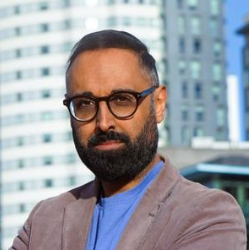
Naumaan Farooq is the Co-Founder and Head of PR at Inked PR, a Manchester-based legal public relations agency located in MediaCity UK. With nearly 20 years of experience working in national newsrooms and advising major organisations, he specialises in reputation management, media strategy, and public messaging for law firms. Naumaan works with a range of legal practices, from boutique regional firms to large city firms, helping them navigate media scrutiny, communicate complex legal issues clearly, and strengthen their public reputation in an increasingly competitive and highly visible legal sector.